Friday, February 17, 2017

Coffee Consumption and Origins in the Middle East


It is interesting to trace the spread of coffee throughout the world, a plant and its bean that have slowly as well as swiftly at times, become one of the planet’s favorite beverages. Its relationship to the Middle East, though relatively little is known or thought of it (coffee is namely thought of as a Western beverage) is built on a strong bond, for the Middle East is the land of its genesis. First discovered in a region of Ethiopia called Kaffa, the energizing power of the brew caused its popularity and spread into the greater area of the Middle East, where it was generally prepared in various ways according to the region, the most famous being Turkish coffee, a style characterized by coffee grounds being gently roasted and unstrained, consumed black or with varying degrees of sugar, sometimes with a cinnamon stick on the side. 


In today’s international culture, coffee consumption has become primarily centered around the West, chiefly in the United States and Western Europe, with brands such as Starbucks and Costa Coffee going on to become massive worldwide chains that now dominate coffee culture and reap most of the benefits from its status as a billion dollar industry. Even though coffee consumption is still low in the Middle East compared to the West, it is a growing industry, spreading now from Dubai, where it is highly in vogue, rather than Ethiopia. Though this is certainly an example of Westernization, it is interesting to see the full circle that coffee has made  in recent years, passing through numerous cultures before coming back to its land of origin - and while the big brands are certainly atop the market, smaller purveyors, independent coffee shops and unique strains of bean are also on the rise, adding a distinctly Middle Eastern flair to the worldwide coffee renaissance that is brewing. 

  • Daniel Autry


Sources:


Thursday, February 16, 2017

After Effects of the Failed Turkish Coup


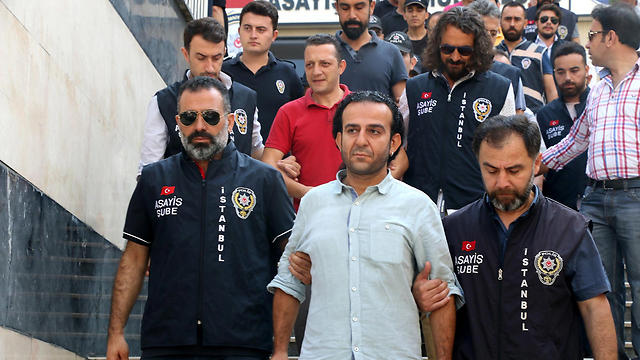
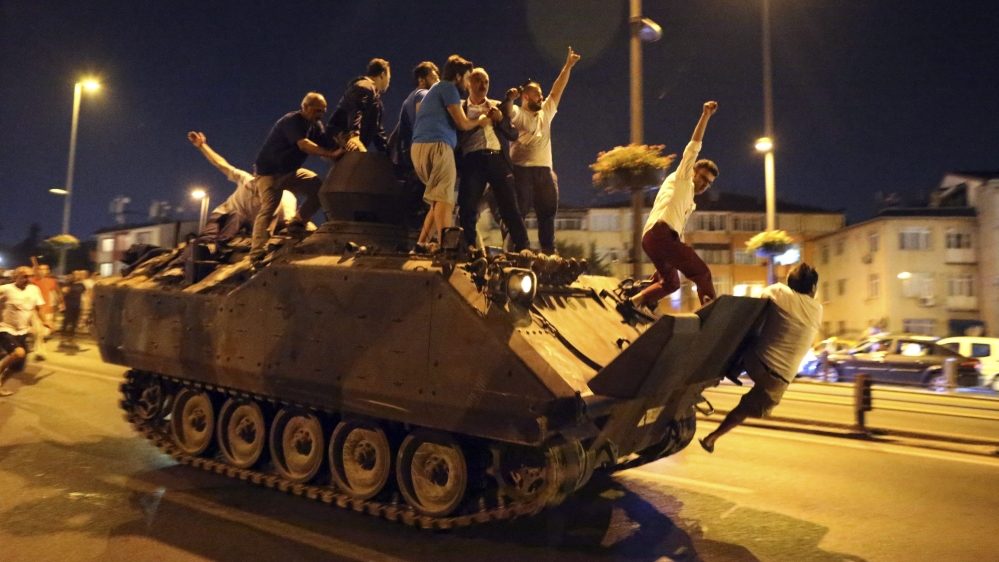
In July 2016, Turkey was under siege and a fourth military coup loomed large across the nation. Turkish fighter jets dropped bombs on the parliament house, tanks and soldiers roomed several cities across the nation which, along with coordinated explosions, rattled the nation. However, people took to the streets to show their support. They took down tanks and with the help of loyal police and army officials, they took down the offensive. Thus, President Erdogan remains in power till this day. But while a response to this act seems only logical, Erdogan’s government has now been accused of running a purge.  


The initial response saw scores of people being arrested or suspended from their jobs, with people accusing Erdogan of using the coup as an excuse to eliminate his enemies. More than 100,000 people have been suspended from their jobs and nearly 37,000 have been detained. Military officers, civil servants, academics, dancers, singers and even teachers have been targeted. Erdogan himself called the coup “a gift from God” and that it was an opportunity to “cleanse.” [1] Amnesty International announced reported that people were beaten, not given water and food, barred from speaking to a lawyer and even raped. [2] Thus, the aftermath of the coup has been called a purge. To this day, people are continuing to be arrested and detained even while EU intelligence reported discredited Turkey’s whole basis for the purge. The report, compiled by Intcen, stated that Erdogan had reportedly planned to purge officials before the coup attempt and that the so called planner, Fethullah Gulen wasn’t behind the coup. [3]

This coup hasn’t only affected Turkey’s internal affairs but has also spread to outside the country. The Supreme Court of Greece decided against extraditing eight Turkish military citing that there would be a “curtailment of their basic human rights.” [4] Turkey’s government has taken extreme offense to this, not only calling the decision political rather than legal but also threatening to botch a refugee readmission deal between both countries. [5] The deal essentially allows Greece to return new irregular refugees crossing from Turkey into Greece, in exchange for EU providing Turkey with certain benefits. [6] This deal has been extremely effective with reports of only 20 people arriving per day into Greece compared to the massive 7,000 previously arriving in 2015. [5] Historically Turkey’s relationship with Greece has been strained over the disputed Island of Cyprus but the tensions may have risen to a new high, with the Greek Defense Ministry reporting that Turkish airplanes violated Greek airspace 138 times in one day. [7]

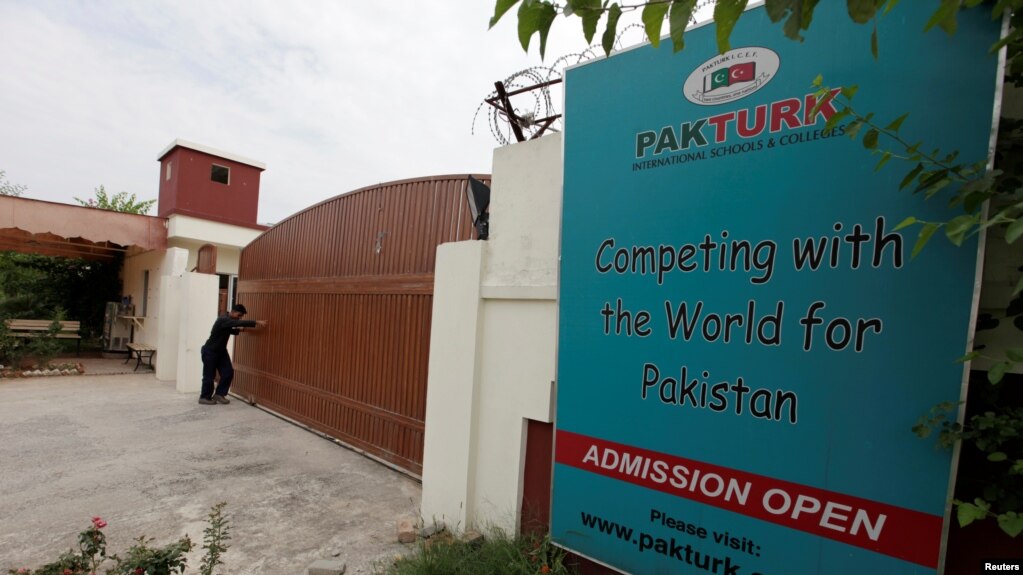
Turkey’s purge has reached also now reached school kids around the world. Erdogan has pressured multiple governments, such as that of Pakistan, to shut down schools associated with Gulen. Around 130 teachers and their families have been deported from Pakistan, after being denied visa extensions. Ankara had asked the Pakistani government to shut down any social institutions with links to Gulen. The schools set up in 1995 by International Non-governmental organization registered under the Turkish government catered to 10,000 students, in a country where 24 million children don’t have access to education. [8] The teachers have been now placed under UN protection after they applied to be resettled anywhere other than Turkey. Fearing arrest, torture and coercion they applied to UN Human Right Committee and now await being resettled elsewhere. [9]


All of these issues, which have stemmed from the failed coup attempt, ask one question. Who is really the bad guy here?

-Dawar Ahmed

References

Picture Credits


Challenges of Journalism in the Middle East and North Africa

By Demerrick Moton

During the Arab Spring in the Middle East and North Africa (MENA) in 2011, grassroots journalists in the region enjoyed a brief expansion in local reporting largely fueled by anti-authoritarian fervor and a populist zeitgeist. Once authoritarian regimes eventually regained control, however, this expansion was followed by crackdowns on dissidence which has continued to have a chilling effect on free speech in the region. Investigative journalism and the strength of the free press in the Middle East have been historically stifled. Nevertheless, the attitudes among Middle Eastern journalists can be broadly described as hopeful, but careful. An influx of foreign funding, new data collection and reporting techniques, a younger and increasingly connected audience, and the rise of social media have all been positive factors for journalism in the Middle East. However, there are still many challenges - old and new - that continue to plague this important institution.

One problem facing investigative journalists in the Middle East is that, in the wake of violent authoritarian crackdowns and sectarian strife, public dialogue has withdrawn from the more optimistic and thoughtful tone that it had during the Arab Spring, to one that is more reserved and careful. Rana Sabbagh, a Jordanian journalist who covered the Arab Spring, mentioned in an interview, "For them, democracy, free speech, and accountability equal anarchy and lack of security. They don't want to become like the Syrian, Libyan, or Yemeni refugees." The consequences for questioning corruption and overreaches of authority in the region are very clear and worrisome. There is very little press freedom in much of the Middle East; stories published by Arab journalists are often rejected by local news outlets and must be published elsewhere, such as in the United Kingdom or the United States. Investigative journalists covering controversial topics are often denied access to official data, such as lawsuits and audit reports, and must exploit back channels.

Investigative journalists are also often confronted with death threats and intimidation by authorities. In August 2016, Iraqi Kurdish journalist, Wedad Hussein Ali was tortured and beheaded by Kurdish security forces for publishing a story that was critical of Kurdish government. Iranian blogger Mohammed Reza Fathi was punished with 444 lashes because of an article that he posted espousing civil and social values that were contrary to those enforced by the regime. According to the Paris-based NGO, Reporters Without Borders (RWB), 19 of the 37 journalists killed in 2016 were in the Middle East when murdered. Many of these journalists are well aware of the dangers facing them and are still determined to spread awareness of corruption and malfeasance in their country/region.

Lina Atallah, former chief of the Egyptian Independent, was among the first to break the story of the Mubarack uprising in Egypt. Currently the editor-in-chief of MadaMasr, Atallah says she wants the press to "activate the conversation, to reopen the political space, and to engage the public in conversation." Increases in foreign funding for investigative journalism and the rise of popular outlets such as Al-Jazeera are part of a trickle of positive developments for the institution. However, in 2014, Egyptian President Abdel Fattah Al-Sisi issued an amendment that threatened life sentences for individuals who received foreign funding with the aim of "destabilizing the government". This, of course, was targeted at muckraking journalist organizations such as MadaMasr, many of whom would not be able to operate without foreign funding. Atallah noted the irony that the government of Egypt itself also accepts foreign funding.

I think that much of the repression that these journalists face is part of the broader problems of instability and sectarian conflict that plague the region. I believe that the bravery and persistence of these investigative journalists in the Middle East is a crucial ingredient for the region's growth and maturation. Lastly, I would argue that since investigative, data-driven journalism in the Middle East is intertwined with the region's economic, social, and political health, supporting this institution would be beneficial not only to people in the Middle East, but to the global community as a whole, given our increasing interconnectedness.

References:
- http://mediashift.org/2015/04/survey-on-media-use-in-middle-east-shows-a-return-to-the-local/
- http://www.themedialine.org/featured/press-freedoms-exist-middle-east/
- http://www.cjr.org/analysis/arab_investigative.php
- https://www.washingtonpost.com/investigations/after-arab-spring-journalism-briefly-flowered-and-then-withered/2015/07/25/cb4c43fe-1c2a-11e5-ab92-c75ae6ab94b5_story.html?utm_term=.938e5ef0af71


Friday, February 10, 2017

Yemen's Costs of War

You may have heard by now that the United States government recently authorized a special operations raid in Yemen. However, you may not have heard about the food crisis in Yemen affecting millions of people. I had not heard about this major problem either until I heard about the raid, so let’s explore both situations. 

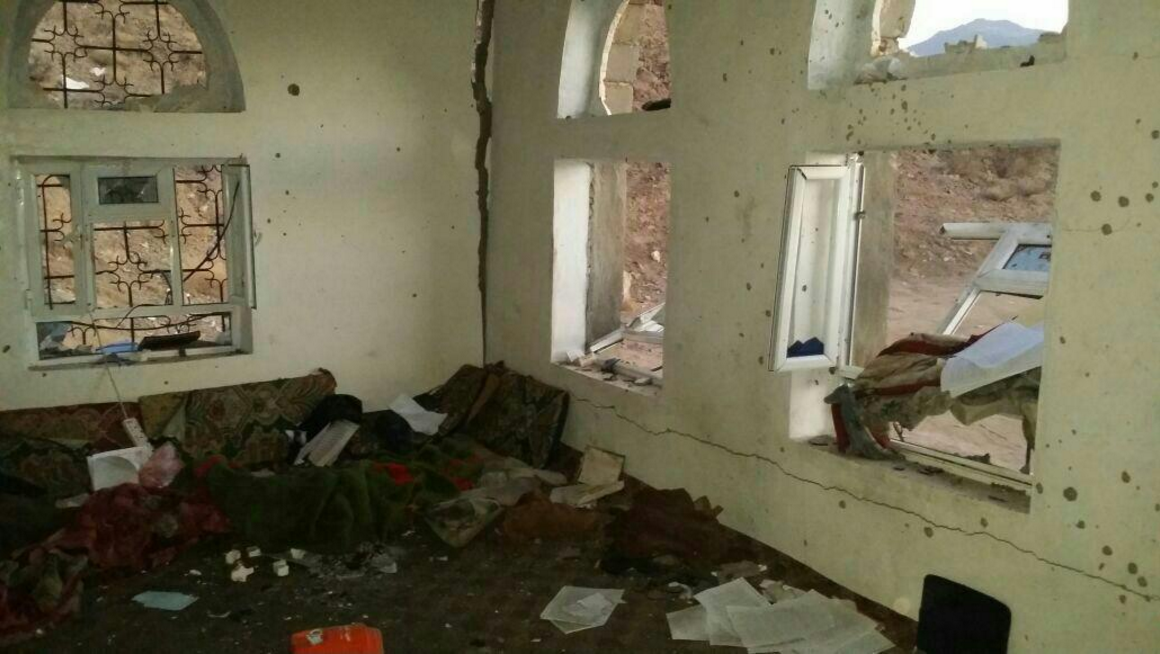
During a January 29th raid, several members of Al-Qaeda in the Arabian Peninsula (AQAP) were killed, as well as many Yemeni civilians and one Navy SEAL.  
This is the first military activity authorized under newly-minted President Trump’s watch, even though it was first planned during the closing months of the Obama administration. 

Much controversy has surrounded the aftermath of this raid. The loss of innocent Yemeni life certainly has put the mission’s “success” in question by many White House officials, although it is arguable that many American leaders are more upset about the fact that a $75 million helicopter had to be destroyed and that an American commando was killed. 
Additionally, the Yemeni government has predictably denounced the U.S. raid. Yemen officials have both called for an end to American operations for the time being and backtracked that statement in recent days. 

Standards of success of a counter-terrorism operation be put aside, let us not forget about the larger crisis at hand for Yemen: food shortages.

Currently, a naval blockade is bringing down port shipments to a trickle. Yemen, already the poorest nation in the Arabian Peninsula, now is home to 14 million citizens who are food insecure. This crisis has emaciated the issue of child malnutrition in the country, 
which is by some metrics the worst in the world. There is not a clear hope or future in sight for Yemenis, either. The problem has become worse as the Houthi rebels and AQAP fight the government and incite more deadly airstrikes against the cities and villages. Hospitals have become overloaded with parents and starving children. Many families do not have money to pay for food or medical care as their ways of life are being dismantled by war and conflict. 

This is one of the true costs of war, and it is atrocious. 

Picture credits:
http://www.arabiansupplychain.com/article-11153-saudi-naval-coalition-blockades-yemen-port/
https://www.theguardian.com/world/2016/oct/04/yemen-famine-feared-as-starving-children-fight-for-lives-in-hospital#img-1
https://www.bellingcat.com/news/mena/2017/02/02/open-source-survey-of-the-us-raid-in-yemen/ 

Sources:
https://www.theguardian.com/world/2016/oct/04/yemen-famine-feared-as-starving-children-fight-for-lives-in-hospital
https://www.wfp.org/emergencies/yemen/
http://www.newsweek.com/trumps-yemen-raid-killed-nine-children-what-went-wrong-554611
http://www.nationalreview.com/article/444766/yemen-raid-donald-trump-barack-obama-john-mccain-sean-spicer-media
https://www.nytimes.com/2017/02/08/world/middleeast/yemen-raid-american-military.html?emc=edit_nn_20170209&nl=morning-briefing&nlid=69036351&te=1&_r=0
http://www.cnn.com/2017/02/08/middleeast/yemen-raid-explainer/index.html


-Davis Riddett

Thursday, February 9, 2017

Saydnaya Prison

Between 2011-2015, the Syrian government systematically tortured and killed thousands of people in a military jail near Damascus. This information comes from human rights group Amnesty International, after they recently. published a report on operations within the military jail. The report states that as many as 13,000 people were killed over the four-year period, and the violent operations likely continued after 2015.


The location of the hangings, Saydnaya prison, has two buildings. One, the “white building”, is for military personnel. The other, the “red building”, is reserved for civilians who opposed to the government.


This information comes from interviews with witnesses, including guards and officials. Guards reportedly rarely supplied prisoners with food and water. Torture and other physical forms of punishment were a regular occurrence, leaving many prisoners permanently injured or disabled. Hangings occurred in the middle of the night, and bodies would be carted off to be buried in mass graves.


In response, the Syrian Justice Ministry denied the report, stating that it was “devoid of truth”. Despite this, the report called for an investigation by the United Nations, and has earned some attention from the UN. The UK ambassador to Syria, Peter Wilson spoke at the UN regarding the report.


We have seen the report of Amnesty International on atrocities in Syria," he said. "Our foreign secretary has said he is sickened by that report. We strongly condemn these atrocities, and we continue to effort to shine a light on what's happening in Syria and to hold people accountable for these actions.”

- Freya James


Friday, February 3, 2017

Immigration: Then and Now

There are striking similarities between the immigration standards of today and those of the past. Just as the new US immigration executive order gives priority to religious minorities in Muslim majority countries, the United States also gave preference to Christian Syrian immigrants in the early 20th century. Similarly, colonial French Algeria only issued citizenship to Algerian Muslims if they denounced Islam; Christian and Jewish Algerians were given citizenship priority. Even though Christianity, Judaism, and Islam are closely related, Islam has been seen as less "white" than its monotheistic cousins (Between Arab and White, Sarah Gualtieri). Because of this perception, Muslim, Jewish, and Christian immigrants and refugees who come from the same city and have the same backgrounds may have separate citizenship status based on religion alone. It's unfortunate that this association between citizenship and religion still exists today, and we must work toward religious understanding to be more united as a nation.
-Elle

Wednesday, February 1, 2017

Mosul Dam and its imminent risk


The Mosul Dam


An Imminent Issue
The Mosul Dam is an immense hydroelectric dam situation on a stretch of the Tigris in western Iraq.
Completed in 1986, the dam's structural integrity has been called in to question, as the foundation it was constructed upon is inherently unstable. This poses an issue due to the fact that it is situated upstream of the city Mosul, and the critical failure of the dam would unleash a cataclysmic wave upon the nearly seven million inhabitants located within the flood plain. The risk has been estimated to be "worse than a nuclear bomb" being detonated due to the sheer number of people at risk.


Attempts to repair the dam have been made in the past, but no amount of effort has rectified the inherently flawed foundation. Efforts have included the continuous pumping of cement mixtures into the sinkholes that have spawned beneath the dam, though this strategy is neither long term nor sustainable. As of December, the Italian company TREVI has begun their attempt at stabilizing the dam, though experts agree that this is only prolonging the inevitable disaster. Further pushing the situation is the estimated $200 million dollar price tag associated with ongoing maintenance.


Being the fourth largest dam in the Middle East, the dam also serves as an immense strategic asset. This has led to complications, as ISIS has taken control of the dam in the past, and efforts to retake the dam have caused it to shift hands several times. While these conflicts rage, maintenance could not take place, leading to further degradation and a critical failure occurring more imminently. While plans have been devised to evacuate portions of the threatened populace, the ecological, economic, and societal destruction will devastate the area.

It's not a matter of if, but when.


-Thomas Schmelzle (tschmelzle3)


Sources:

http://www.news.com.au/world/middle-east/mosul-dam-collapse-will-be-catastrophic-for-iraq/news-story/a5f30073964e5e59699efe075bb4f81b

http://www.aljazeera.com/indepth/features/2016/11/mosul-dam-collapse-worse-nuclear-bomb-161116082852394.html

https://english.alarabiya.net/en/perspective/features/2016/10/20/Is-Mosul-hosting-one-of-most-dangerous-dams-in-the-world-.html

http://www.newyorker.com/magazine/2017/01/02/a-bigger-problem-than-isis